A boom truck is a crane mounted on a truck chassis. A stiff boom crane has a fixed-length boom that does not telescope. Both can suit planned lifts where load weight, working radius, site access and set-up space fit the machine. A stiff boom crane service often works well for quick set-up and steady repetitive picks. For heavier, longer-reach or more demanding ground conditions, a rough terrain or all terrain crane may be the better fit.
Compare the load, working radius, site space and schedule, then read our guide to maximizing project efficiency with a hydraulic truck crane.
What Is a Boom Truck and What Is a Stiff Boom Crane?
A boom truck is a truck-mounted crane, often configured with a deck for materials and outriggers for set-up. The boom is powered by hydraulics, which is why these units are also called hydraulic truck cranes. The truck is road legal, so it can drive itself to the job rather than arriving on a lowbed trailer.
The difference between stiff boom and telescopic comes down to how the boom changes length.
- Stiff boom (fixed boom): the boom is a set length. Reach is changed by raising or lowering the boom angle.
- Telescopic boom: the boom extends and retracts hydraulically while the crane is working, so the operator can adjust reach during the shift.
- Knuckle boom: the boom folds at joints like an arm, which keeps it compact for loading close to the truck.
None of these is better in every case. A fixed boom is simple and predictable for repeated picks at a known radius. A telescopic boom is more flexible when the load has to land at several different distances.
How Does a Truck-Mounted Crane Compare With a Mobile Crane?
A truck-mounted crane travels on highways under its own power and sets up on outriggers on firm, level ground. Rough terrain and all terrain cranes are chosen when the required capacity, boom configuration, site access or ground conditions go beyond what a truck-mounted crane can reasonably handle.
| Factor | Boom truck | Rough terrain or all terrain crane |
|---|---|---|
| Getting to site | Drives on public roads | Transport needs vary by model, route and local requirements |
| Set-up | Outriggers and mats | May add assembly and counterweight rigging |
| Reach and capacity | Check the load chart at your radius | Chosen when a truck crane runs out of chart |
| Ground conditions | Needs firm, reasonably level support | May offer better site mobility on uneven terrain, subject to reviewed travel-path and support conditions |
| Materials | A deck may carry some of the load | Materials are typically delivered separately |
Capacity decides most of these calls. Once the load chart runs out at your required radius, flexibility no longer matters. If you are unsure where that line falls, our operated crane rental service team can review the weights and site dimensions with you. Hill Crane rents mobile, rough terrain, all terrain, crawler and boom truck cranes, and the site FAQ states that all rentals include a certified operator.
Which Truck-Mounted Crane Suits Tight Urban Job Sites?
On a downtown Los Angeles street, a Long Beach infill lot or a Phoenix high-rise frontage, the limit is rarely lifting power. It is where the machine can legally and safely stand. A boom truck can work well when the planned crane position, outrigger spread and material needs fit the available street space.
Check Before You Book
Walk the site with these questions in hand:
- How wide is the set-up area once outriggers are fully extended?
- What is below the outrigger pads: slab, vault lids, basement, or soft fill?
- Are there overhead power lines, and what clearance is required?
- Does the lift need a lane closure, sidewalk closure or traffic control plan?
- Can the truck turn in and back out without blocking emergency access?
A crane that is right on paper is the wrong crane if it cannot deploy its outriggers where it has to park. Hill Crane provides traffic control and permit coordination with local agencies alongside crane work in Long Beach, Los Angeles, Anaheim, Riverside, San Diego, Phoenix, Glendale and Tempe.
What Do Electrical and HVAC Contractors Need From a Truck Crane?
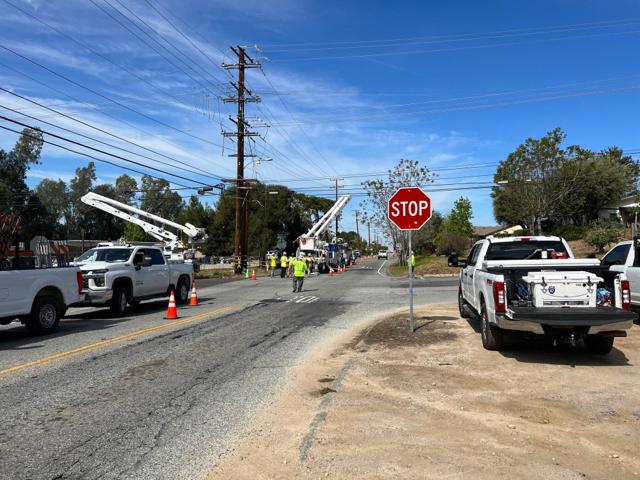
Electrical contractors setting transformers, switchgear or conduit racks usually need controlled, repeatable picks at a known radius, plus strict clearance from energized lines. A fixed boom may suit repetitive picks at a known radius when the load chart, access and required clearances support the lift.
HVAC crews setting rooftop units face a different problem: outreach. The crane stands at street level, clears a parapet, then lands a unit on a curb the operator often cannot see. The governing number is capacity at the far radius, not maximum capacity. A unit that seems light at the truck can exceed the chart once the boom is out over the roof.
For both trades, a documented lift plan is worth the time. Hill Crane offers lift planning with 3D modeling and CAD engineering, which helps confirm crane position, radius and rigging before the truck arrives.
How Fast Can a Truck-Mounted Crane Be Set Up?
Set-up time varies by machine, ground conditions and site access, so no single figure applies. What you can control is the sequence. A typical set-up runs like this:
- Position the truck and confirm swing clearance overhead and on all sides.
- Lay outrigger mats or cribbing sized for the ground bearing pressure at that location.
- Extend and set the outriggers, then level the crane.
- Confirm the load weight, radius and configuration against the load chart.
- Rig the load, run a test lift just clear of the deck, and check stability before the full pick.
The fastest set-ups are the ones where steps one and two were decided in advance. For a specific unit's set-up requirements and configuration, including the Hoist FR 60/80, check the equipment page or request a quote.
Frequently Asked Questions
In everyday use, yes. Both describe a hydraulic crane mounted on a truck chassis. Some suppliers separate them by size or deck configuration, listing larger units under hydraulic truck cranes. When comparing options, go by capacity and boom type rather than the category name.
A stiff boom suits repetitive lifts at a consistent radius, where the operator is not changing reach between picks. A telescopic boom is better when loads land at varying distances or when the crane must retract to clear obstacles during the shift.
Requirements vary by city and county, so confirm with the local agency early. Street lifts commonly involve lane or sidewalk closures and a traffic control plan. Hill Crane offers traffic control and permit coordination with local agencies, which can be arranged alongside the crane.
It depends on the unit weight, rigging weight, building height and how far the crane must reach past the parapet. Available capacity changes as radius increases, so confirm the lift against the applicable load chart. Send the weights and a site photo with your quote request.
It may be possible when the planned travel path and outrigger locations provide suitable support. For soft, rutted, sloped or active-earthwork sites, have the crane provider review access and ground conditions before selecting a truck-mounted or rough terrain crane.
Choosing the Right Stiff Boom Crane Service for Your Lift
Start with the load chart, not the truck. Weigh the load, measure the working radius, then check what the ground and the street allow. A stiff boom crane service may fit planned urban and trade lifts when the required radius, set-up area and ground support match the selected machine. A rough terrain or all terrain crane earns its place when capacity, boom length or ground conditions push past what a highway chassis can do.
Hill Crane Service supports contractors and project owners across Southern California and the Phoenix area with operated crane rental, rigging, lift planning, heavy haul and traffic control from one provider. Call 800-525-5859 or request a quote at hillcrane.com.