A telescopic crane is a mobile crane with a boom built from nested steel sections that slide in and out of each other, much like a telescope. Hydraulic power pushes the inner sections out to reach the load, then pulls them back in for travel. That design shapes both the crane's strengths and its limits.
For contractors in Long Beach, Anaheim, Riverside or Phoenix, this matters on the first day of planning. The wrong boom type can cost you setup time or a lift you cannot make at the required radius. This guide explains the mechanism in plain language, then covers the trade-offs. Our crane lifting capacity guide is a useful companion to this article.
Key Takeaways
- The boom is made of nested sections that slide out hydraulically, so no bolt-up boom assembly is needed on site.
- Quicker setup and limited setup space are the main advantages on busy sites.
- Capacity falls as the boom extends and the load radius grows. The load chart, not the crane's rated tonnage, governs the lift.
What Is a Telescopic Crane?
A telescopic crane has an integrated boom made of nested sections that changes length hydraulically. The largest section, called the base section, is fixed to the crane's superstructure. Smaller sections sit inside it. When the operator extends the boom, each inner section slides forward until the tip reaches the needed height or radius.
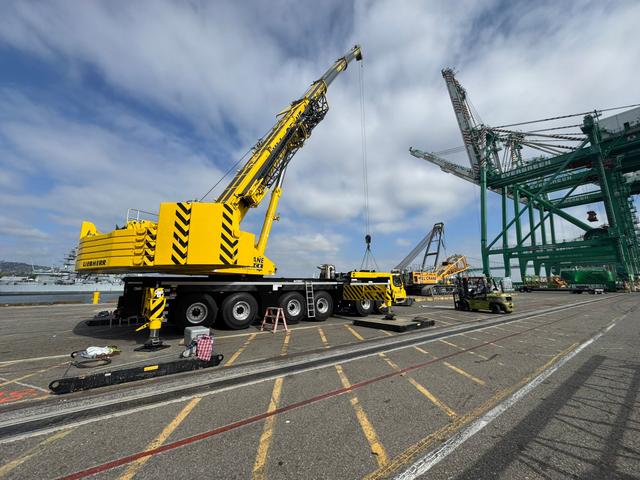
The same boom design appears on several carrier types. A telescopic truck crane rides on a road-going chassis. A rough terrain crane uses large tires for unpaved ground. An all terrain crane mixes highway travel with off-road ability. A telescopic crawler crane runs on tracks. The carrier changes how the crane travels and sets up, but the boom works the same way in each case.
How Does a Telescopic Boom Extend and Retract?
The engine drives a hydraulic pump. The pump pushes oil under pressure into one or more cylinders inside the boom. A hydraulic cylinder is simply a sealed tube with a rod that moves when oil pushes against a piston. As the rod extends, it drives the boom sections outward. Reversing the oil flow pulls everything back in.
Extension systems vary by crane model, but they move nested sections in a controlled sequence. The manufacturer instructions and load chart govern how a boom may be configured during a lift. Low-friction wear pads sit between the sections so the steel slides smoothly and stays aligned. Separate cylinders raise and lower the whole boom, which changes the boom angle. The hoist rope and winch handle the load itself.
What Holds the Crane Steady
Wheeled telescopic cranes may use outriggers to support the lift. Outriggers extend sideways and press pads against the ground to widen the crane's stable base. The outrigger setup, ground conditions and selected configuration all affect the applicable load chart, so confirm the exact setup in the manufacturer instructions. Ground bearing pressure matters too, which is why mats are common on fill, soft soil or over underground utilities.
What Are the Advantages of a Telescopic Crane?
The strengths follow directly from the boom design.
- Quicker setup. The crane arrives with its boom attached, so there is no bolting of lattice boom sections before the first pick.
- Compact stowage. A retracted boom can help where setup space is limited, but carrier dimensions and access needs vary by crane type and model.
- Flexible reach during the shift. The operator can change boom length between picks, which helps when a crew sets HVAC units, precast panels or steel at varying distances.
This is why a telescopic mobile crane is often considered for short-duration work, such as a one-day rooftop set or an equipment swap during a plant outage.
What Are the Limits of a Telescopic Boom?
For many cranes, the headline tonnage is the maximum rating at the shortest boom and the tightest radius. Those conditions rarely match a real job. As the boom extends and the load moves out from the center of rotation, the leverage working against the crane grows, so the allowable load drops.
Long-boom lifts also depend on the crane model, configuration and site conditions. Wind can affect an extended-boom lift, so use the specific crane's load chart and manufacturer instructions rather than general figures. Start with the load weight, radius and required hook height, then confirm the configuration against the applicable chart before anyone books a crane.
When Should You Choose a Telescopic Crane Over a Lattice Boom Crane?
Choose by the shape of the job, not by preference. The table below summarizes the general trade-offs.
| Factor | Telescopic boom | Lattice boom |
|---|---|---|
| Setup | Boom arrives attached. | May require on-site boom assembly, depending on configuration. |
| Site space | Suits tight urban sites. | May need an assembly area. |
| Lift scope | Often suits shorter or changing scopes. | Can suit sustained work from one setup. |
| Long radius | Confirm capacity from the chart. | Confirm capacity from the chart. |
A telescopic boom crane usually fits when the schedule is tight, the site is cramped, and the picks are spread across a shift. A lattice crane is more often considered when loads are heavy, reach is long, and the crane will stay in one position while a structure goes up.
Local Planning Notes
For work in Los Angeles, Long Beach, Anaheim, Riverside, San Diego, Phoenix, Glendale, Tempe and Maricopa County, confirm the access route, setup area, overhead obstructions and ground support early. Learn more about Hill Crane's telescopic crane options.
Frequently Asked Questions
Hydraulic oil under pressure drives cylinders inside the boom, pushing nested steel sections out to the length the operator needs. Other cylinders raise or lower the boom angle, and a winch handles the hoist rope. Reversing the oil flow retracts the boom for travel.
Because the load moves further from the crane's center of rotation. That longer lever arm increases the tipping force and the stress in the boom, so the load chart reduces the allowable weight. The weight of the extended boom sections also counts against capacity.
Both use a telescoping boom. A telescopic truck crane is built on a road-going truck chassis. A rough terrain crane has large tires and a short wheelbase for unpaved sites, but it is not generally intended for highway travel and may need transport between jobs.
Tracks can spread crane weight over a larger area, which can help on soft or uneven ground. Some telescopic crawler models also have pick-and-carry capability within their chart limits. Confirm the capability and limits for the exact model before planning a lift.
Wheeled telescopic cranes commonly lift on outriggers, and the chart changes with the setup used. Some wheeled cranes may have other manufacturer-approved setup options. Crawler versions lift on tracks instead. Always follow the manufacturer's chart for the exact setup on site.
Planning Your Next Lift With a Telescopic Crane
Understanding the mechanism makes crane selection easier. A telescopic crane can reduce boom-assembly work and adapt its reach during a shift, but the required radius, load and chart capacity still determine whether it fits the lift. To discuss your lift, request a quote or call 800-525-5859, and review the operated crane rental services that fit your schedule.
Hill Crane Service is a family-run crane rental, rigging and heavy haul company based in Long Beach, California, serving Southern California and the Phoenix, Arizona area. To plan a lift with an operated crane and a documented lift plan, visit hillcrane.com.