A refinery turnaround operates on a schedule where every day of downtime costs the facility money measured in millions. The production that is not happening while the unit is offline, the contractor crews that are standing by waiting for the critical path activity to complete, and the penalty clauses that some turnaround contracts carry for schedule overruns all create financial pressure that makes the crane and rigging contractor one of the most consequential vendors on a refinery maintenance project.
The crane contractor who shows up late, who has equipment problems mid-turnaround, whose rigging team is not familiar with the specific challenges of working inside a petrochemical facility, or whose lift planning did not anticipate the access constraints that a congested refinery creates is the contractor who puts the turnaround schedule at risk. That is not a position any refinery maintenance manager wants to be in.
Hill Crane has been providing crane and rigging services across California and Arizona since 1947. The refinery and petrochemical sector is a significant part of the company's work, and the specific demands of turnaround crane service in Southern California's refinery corridor from the Los Angeles Basin through the Long Beach and Carson area facilities are exactly the kind of complex, time-sensitive, high-consequence lifting that Hill Crane's equipment, personnel, and experience are built to handle.
What Makes Refinery Turnaround Crane Work Different
The crane work in a refinery turnaround is not general construction lifting applied to an industrial setting. It is a specialized lifting environment with characteristics that affect equipment selection, rigging approach, lift planning, and operational execution in ways that crane contractors without specific refinery experience do not anticipate.
Congested Access and Structural Constraints
Operating refineries have been built and modified over decades. Pipe racks run at multiple elevations throughout the facility. Structural steel and equipment that was added in subsequent modification projects occupies space that was open when the original facility was designed. The result is a congested environment where the crane's boom, the load's travel path, and the swing arc of the lift must all navigate around existing infrastructure that cannot be moved and cannot be contacted during the lift.
Lift planning for refinery turnaround work requires mapping the crane setup position, the boom configuration, and the load's complete travel path through the refinery environment with specific attention to every clearance along that path. A lift that appears feasible from the hook capacity numbers alone may require a specific crane setup position that is the only location in the facility with adequate clearance for the boom and the load travel path simultaneously. Finding that position requires a site assessment that is done with facility drawings, field verification, and the experience to recognize clearance constraints that do not show up in drawings.
Classified and Controlled Environments
Refineries are classified hazardous locations with specific equipment requirements for electrical systems, communication devices, and in some areas, equipment with potential ignition sources. Crane operators and rigging personnel working inside refinery boundaries must be trained in site-specific safety protocols, must have completed the facility's safety orientation, and must carry the permits that the facility's safety management system requires for specific activities.
The safety management system of a major California refinery, whether it is a facility in the Carson, Torrance, or Richmond area, imposes a layer of planning and coordination on turnaround crane work that is not present on standard commercial construction sites. Hot work permits, confined space entry coordination when lifts involve equipment adjacent to vessel entries, and the facility's emergency response procedures all require integration with the crane contractor's operations.
Equipment Value and Fragility
The vessels, heat exchangers, reactors, and process equipment being lifted during a refinery turnaround represent significant capital value and in many cases cannot be replaced on a short timeline if damaged during handling. A heat exchanger bundle being pulled for tube cleaning and inspection is precision equipment that cannot be set down on an uneven surface, cannot be rigged at a location that concentrates load on the tube sheet, and cannot be allowed to swing into adjacent structures during the lift.
This equipment sensitivity requires rigging configurations and lift execution standards that prioritize load protection alongside worker safety. The spreader bar that distributes load across the appropriate lift points. The tag lines that control load movement without creating additional forces. The lift speed management that prevents dynamic loading from sudden stops or starts. These are not practices that every crane crew applies as a matter of course. They are practices that a crew with refinery turnaround experience has developed and standardized.
Crane Selection for Refinery Turnaround Applications
The congested environment and specific access constraints of refinery turnaround work influence crane selection significantly. The largest available crane is not the right choice for most turnaround lifts. The right choice is the crane configuration that fits the available setup position, achieves the required capacity at the working radius dictated by the facility layout, and navigates within the overhead and lateral clearances the facility imposes.
Hydraulic Truck Cranes
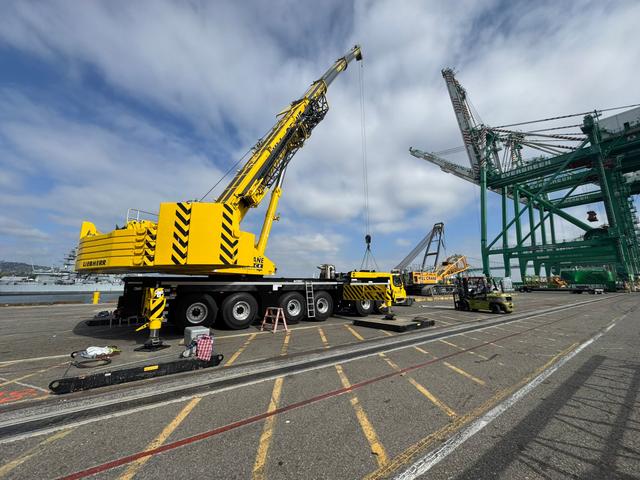
Hydraulic truck cranes are the most commonly used crane type for the majority of refinery turnaround lifts because their compact footprint, self-erecting capability, and ability to maneuver within the facility provide access that larger cranes cannot achieve. A hydraulic truck crane can set up in a process unit's internal access road with minimal preparation, configure its boom for the specific height and radius the lift requires, and be repositioned to the next lift within the same shift without the setup and breakdown time that larger cranes require.
The efficiency advantages of hydraulic truck cranes for turnaround work, including their ability to complete multiple lifts per shift in congested industrial environments, are covered in the article on maximizing project efficiency with hydraulic truck cranes and when they are the right choice.
All-Terrain Cranes
All-terrain cranes bridge the gap between the compact hydraulic truck crane and the larger crawler cranes that heavy vessel lifts require. For turnaround lifts in the 50 to 200 ton range where a standard hydraulic truck crane's capacity is insufficient and a large crawler crane's footprint is impractical in the facility layout, an all-terrain crane in the appropriate capacity class provides the combination of access flexibility and lifting capability the application requires.
Specialized Configurations
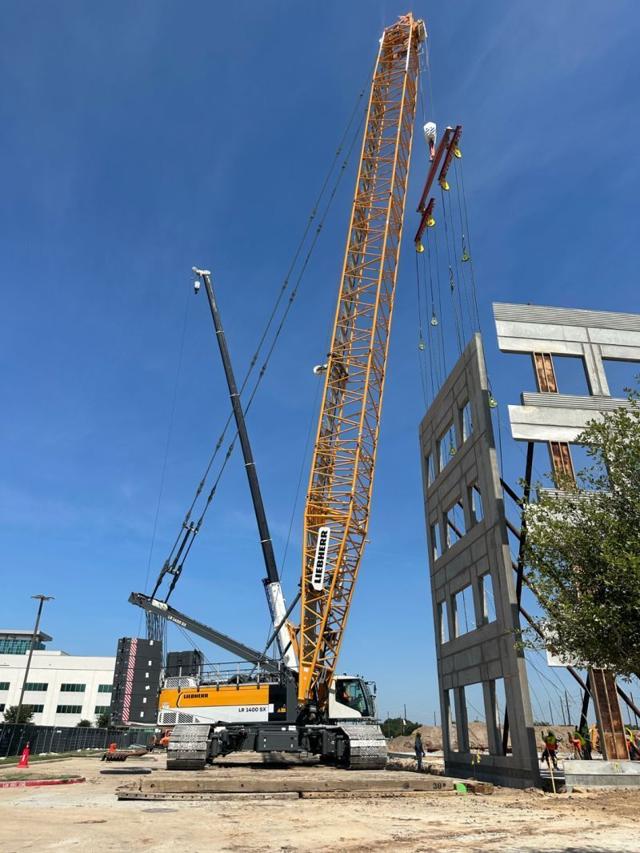
Some refinery turnaround lifts require specialized crane configurations including luffing jib attachments that allow the boom to work above adjacent equipment at steep angles, fixed jib configurations that extend reach without increasing the crane's working radius, or specific counterweight configurations that allow the crane to work in its required position without the counterweight swing arc creating conflicts with adjacent structures.
These configuration decisions are part of the lift planning process that precedes every Hill Crane turnaround project. The lift plan identifies the required configuration before equipment is mobilized, which prevents the field discoveries that require reconfiguration after the crane is on site and the turnaround clock is running. The importance of detailed lift planning as the foundation for successful turnaround crane work is covered in the article on why detailed lift planning is essential for successful heavy lifting projects.
The 24/7 Availability Requirement
Refinery turnarounds do not operate on a Monday through Friday, 8 to 5 schedule. The schedule pressure of a shutdown unit means that work continues around the clock, and the crane contractor who is not available for a critical lift that arises at 2 AM because the maintenance sequence reached that point earlier than projected is a contractor whose unavailability puts the schedule at risk.
Hill Crane's 24/7 availability for crane and rigging services is not a marketing statement. It is an operational requirement for the turnaround market. A turnaround that is scheduled to restart in 21 days cannot wait until 8 AM Monday for a crane contractor to become available. The crane moves when the maintenance sequence requires it, day or night, weekday or weekend.
This availability requirement extends to equipment problems that occur during the turnaround. A crane that develops a mechanical issue during a night shift needs to be addressed immediately, not triaged until the next business day. Hill Crane's maintenance capability and the field support infrastructure behind the equipment it deploys on turnaround projects reflects the understanding that turnaround work does not accommodate conventional business hour service response.
Working With California Refineries Regulatory and Permit Context
California's refinery operations are subject to regulatory oversight from multiple agencies including Cal/OSHA, the South Coast Air Quality Management District and other regional air quality agencies, the California State Fire Marshal for facilities with petroleum storage, and the facility's own Process Safety Management program that complies with OSHA's PSM standard.
The turnaround crane contractor working at a California refinery operates within this regulatory environment. Crane operations that generate noise, that involve welding or cutting near the crane operations, or that take place adjacent to process equipment with specific isolation requirements may be subject to permit conditions that affect when and how the crane work can be performed.
Understanding this regulatory context and planning crane work around it rather than discovering regulatory constraints during execution is part of what Hill Crane's experience in California's refinery sector provides. The safety protocols and regulatory compliance framework that govern Hill Crane's crane operations across California and Arizona, including the refinery-specific requirements that apply to this market, are covered in the article on safety protocols for crane operations and how Hill Crane ensures risk-free lifts.
Rigging for Refinery Equipment: Specific Considerations
Refinery turnaround rigging requires attention to the specific characteristics of the equipment being handled that standard commercial construction rigging does not encounter.
Vessels and exchangers with process residue may have weight distributions that differ from the manufacturer's design weight due to fouling, scale buildup, or retained liquids. The actual lift weight must be verified rather than assumed from nameplate or design data. Rigging capacity selection based on assumed weight that is lower than actual weight creates a rigging overload that may not be immediately apparent but that reduces the safety margin during the lift.
Lift point locations on process equipment are typically engineered and marked by the manufacturer for specific rigging configurations. Using lift points that were not designed for the rigging configuration being applied risks structural damage to the equipment. For equipment where the manufacturer's lift point documentation is not available, engineering evaluation of the appropriate lift points is required before rigging is applied.
The crane and rigging service that Hill Crane provides for refinery turnaround work, as part of the complete multi-service lift capability that reduces project management complexity, is described in the article on how multi-service lift partners reduce project complexity and cost overruns on major industrial projects.
Requesting Refinery Turnaround Crane Services From Hill Crane
The information that allows Hill Crane to provide a meaningful turnaround crane service proposal includes the facility location, the equipment being lifted and its weight, the available crane setup positions within the facility, the lift schedule and total number of crane lifts anticipated, any special rigging requirements for the equipment, and the turnaround start and completion dates.
With this information, Hill Crane can confirm equipment availability, develop preliminary lift plans for the major lifts, identify any access or clearance concerns that require field verification, and provide a service proposal that reflects the actual requirements of the turnaround rather than a generic estimate.
Hill Crane serves refinery and petrochemical facilities across Southern California including the Los Angeles Basin, Long Beach, Carson, Torrance, and the Richmond area in Northern California, as well as refinery and industrial facilities in Arizona.