California and Arizona are two of the most active renewable energy construction markets in the United States. California's Renewable Portfolio Standard drives continuous development of utility-scale wind and solar projects across the state. Arizona's solar resource and the expanding transmission infrastructure connecting generation to the Southwest grid make it one of the fastest-growing renewable energy markets in the country. Both states require crane and heavy lift services at every stage of renewable energy project development, from initial component installation through ongoing operations and maintenance.
Hill Crane has been providing crane and rigging services across California and Arizona since 1947. The renewable energy sector is a significant and growing part of the company's work, and the specific demands of wind turbine erection, solar tracker installation, and transmission infrastructure construction align directly with Hill Crane's equipment capabilities and field experience in these two states.
Wind Turbine Erection: The Heavy Lift Challenge of Renewable Energy
Wind turbine installation involves some of the most demanding heavy lift work in the construction industry. Modern utility-scale wind turbines have hub heights of 80 to 120 meters and nacelle weights of 80 to 100 tons or more. The tower sections, the nacelle, and the rotor blades all require crane lifts that demand significant capacity at extended radius in conditions that wind sites typically generate: elevated terrain, exposure to wind, and often remote access that limits the equipment that can reach the site.
Tower Section Installation
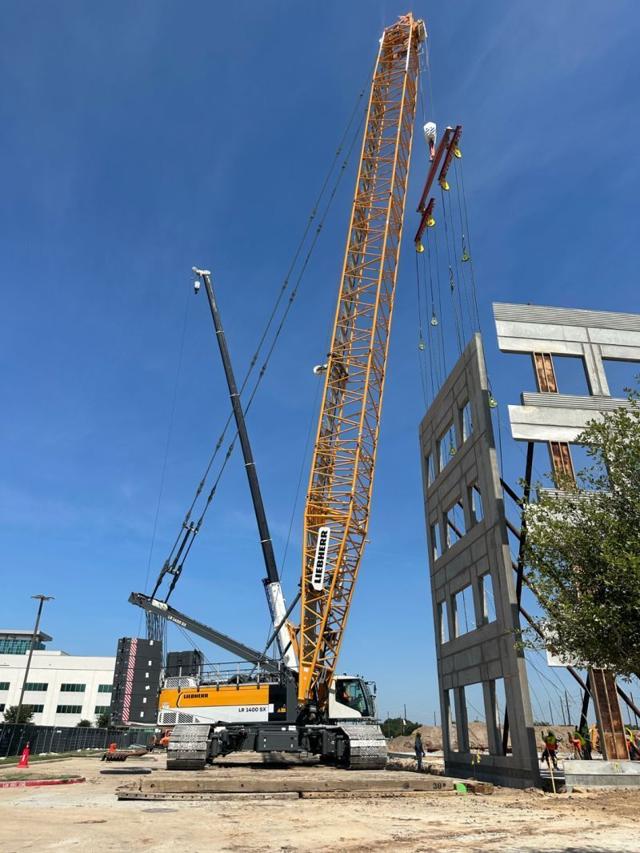
Wind turbine tower installation proceeds in sections, with each section lifted and mated to the previous as the tower rises to its full hub height. The crane selected for tower section lifting needs to provide adequate capacity at the radius required by the specific site layout, accounting for the tower's own footprint and the crane's required offset from the tower base.
California and Arizona wind projects frequently occur on ridge terrain, canyon edges, and elevated landforms where the wind resource is concentrated. This terrain creates crane access challenges that flat-terrain wind projects do not encounter. The crane setup position may be constrained by the slope, and the boom configuration has to clear the terrain features that surround the turbine foundation. These site-specific constraints are the kind of pre-lift planning challenges that Hill Crane's field experience with California and Arizona terrain prepares the team to evaluate before mobilization rather than discovering on site.
Nacelle and Drivetrain Installation
The nacelle, which houses the generator, gearbox, and control systems, is the heaviest single lift in most wind turbine installation sequences. Nacelle weights for utility-scale turbines range from 80 tons for smaller machines to over 200 tons for the largest onshore models. The nacelle lift requires the crane to place the component precisely on the tower top at full hub height, typically within millimeter tolerances, under the time pressure that open weather windows create on wind-exposed sites.
The relationship between boom configuration, counterweight setup, and the load handling precision required for nacelle placement is the lift planning problem that defines which crane and which configuration is right for each specific turbine model and each specific site. Detailed lift planning that accounts for the nacelle weight, the hub height, the required radius, and the terrain features surrounding the tower is the preparation that makes nacelle lifts repeatable rather than improvised. How detailed lift planning drives heavy crane project safety is covered in the article on how engineered lift planning improves heavy crane project safety.
Blade Installation
Blade installation is the final and most technically demanding sequence in wind turbine erection. The blade root has to be mated to the hub at hub height while the blade is cantilevered in its full length, typically 40 to 60 meters for utility-scale turbines, from the crane hook. The blade's aerodynamic profile makes it sensitive to wind forces during the lift, and blade installation is typically restricted to low-wind windows that are carefully monitored and planned around.
Some wind turbine installation operations use a dedicated blade installation crane alongside the main assembly crane, using a smaller crane to control the blade tip while the main crane supports the blade root. This two-crane blade pick is one of the multi-crane coordination applications that Hill Crane's experience with complex lift planning addresses. The coordination of multiple cranes on a single lift, and how the lift plan accounts for the interaction between cranes during a tandem pick, requires the engineering analysis and field discipline that single-crane lifts do not demand to the same degree.
Solar Energy Construction: Crane Requirements at Different Project Scales
Utility-scale solar projects generate crane and heavy lift demand that varies significantly with the project's technology type and scale.
Fixed-Tilt and Tracking System Support Structures
The most volume-intensive crane and heavy equipment work on a solar project is the foundation and support structure installation that carries the solar panels. This work is primarily handled by pile-driving equipment and light construction equipment rather than by large cranes. However, the delivery, staging, and placement of heavy components including tracker drive assemblies, central inverters, and transformer equipment requires crane capability at various points in the project sequence.
Substation and Transformer Installation
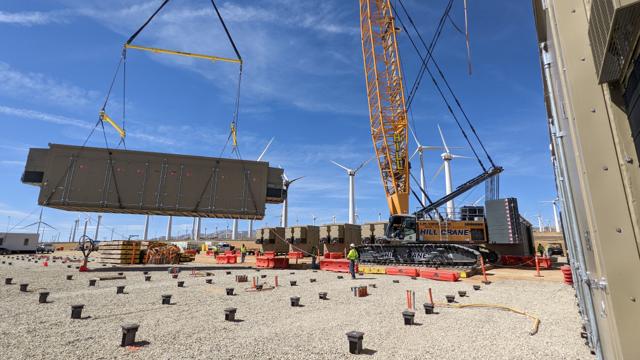
Every utility-scale solar project connects to the grid through a substation that includes power transformers, switchgear, and the electrical infrastructure that converts the project's generation to grid voltage. Power transformers for large solar projects are heavy, precision equipment that requires engineered lifting procedures, specialized rigging, and crane capacity matched to the transformer's weight and the specific installation geometry.
Transformer installation in a solar substation is the crane work on a solar project that most closely resembles the substation and industrial lifting that Hill Crane performs across California and Arizona outside the renewable energy sector. The same rigging discipline, the same precision placement requirement, and the same attention to equipment sensitivity that transformer installation demands in any application applies in the solar project context.
Concentrated Solar Power Plant Components
Concentrated solar power plants using parabolic trough or power tower technology require crane services for the installation of large receiver assemblies, heliostats, and the heavy mechanical equipment in the power block. CSP plant construction in California's Mojave Desert and in Arizona's southern desert regions has generated significant crane demand that is different from the photovoltaic installation work that dominates current solar development but that represents the high-complexity end of solar crane services.
Transmission Line Infrastructure: Crane Services for Renewable Energy Connectivity
Renewable energy generation is only useful when it can be transmitted to where the power is needed. The transmission lines, substations, and interconnection infrastructure that connect California and Arizona's renewable generation to the regional grid require crane and heavy lift services throughout the construction sequence.
Transmission Tower Erection
High-voltage transmission towers carry the conductors that move power from remote generation sites to load centers. Tower sections and complete tower assemblies require crane placement at each tower location along the line route. The terrain that characterizes many California and Arizona renewable energy transmission corridors, including desert, mountainous, and mixed terrain, creates access and setup constraints that crane planning has to address specifically for each tower location.
Substation Equipment Installation
The large power transformers, circuit breakers, and bus work at transmission substations require crane services for installation and for the periodic maintenance replacements that occur through the substation's operating life. High-voltage transmission substations in California and Arizona serve the renewable energy projects that feed into them, and the crane services that support substation construction and maintenance are part of the renewable energy infrastructure support that Hill Crane provides.
Operations and Maintenance Crane Services for Existing Wind Projects
Wind turbines require periodic maintenance that involves crane services for component replacement and major maintenance activities. Gearbox replacement when the primary drivetrain component fails. Generator replacement during major overhauls. Blade replacement following damage from lightning, leading edge erosion, or impact events. Nacelle component replacements that require the crane to work at hub height in the confined environment at the top of the installed tower.
Operations and maintenance crane work at existing California and Arizona wind projects presents different planning challenges than initial installation. The turbine is surrounded by other turbines that constrain crane positioning. The access roads that were adequate for construction equipment may have deteriorated since the project was commissioned. And the urgency of restoring a non-operating turbine to production creates schedule pressure that installation project timelines do not always impose to the same degree.
Hill Crane's ability to mobilize to California and Arizona wind project sites for O&M crane work, and the 24/7 availability that emergency O&M situations require when turbine downtime is generating direct revenue loss for the project owner, is part of the service offering that distinguishes a crane company with genuine renewable energy experience from one that handles renewable energy projects opportunistically. How Hill Crane's crane and rigging services improve project coordination and efficiency across complex project environments is covered in the article on how crane services improve project coordination and efficiency on complex projects.
Ground Conditions and Site Access at Renewable Energy Projects
California and Arizona renewable energy projects occupy terrain that creates specific ground condition challenges for crane setup and operation. Desert caliche hardpan in Arizona and California's Mojave that appears solid but may have subsurface voids or clay layers. Sandy desert soil that provides inadequate bearing for crane outrigger loads without ground preparation. Ridge terrain at California wind sites where the slope affects crane stability and outrigger extension options.
Ground condition assessment before crane mobilization to a renewable energy project site determines whether additional ground preparation is required, which crane configuration is appropriate for the available setup areas, and what mat or pad requirements the outrigger loads impose on the specific soil conditions at the site. Arriving at a remote renewable energy site without this assessment and discovering that the proposed crane setup position is not adequate for the lift creates exactly the mobilization and schedule impact that pre-planning exists to prevent.
The ground conditions assessment process and how site-specific soil and terrain evaluation drives crane setup planning is covered in the article on ground conditions and crane setup site assessment for California and Arizona projects.