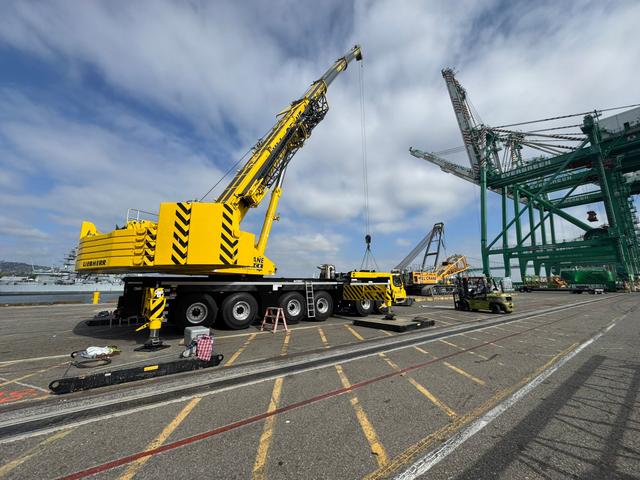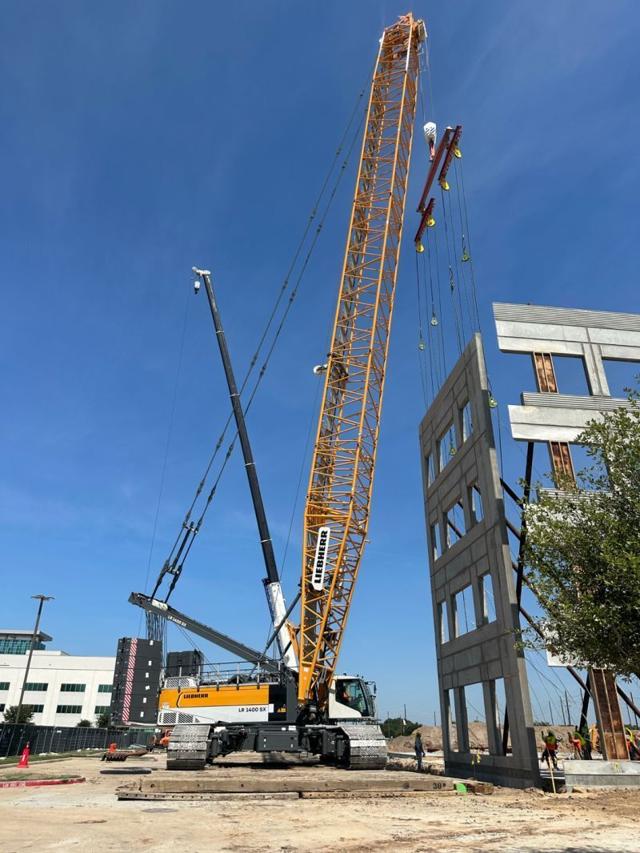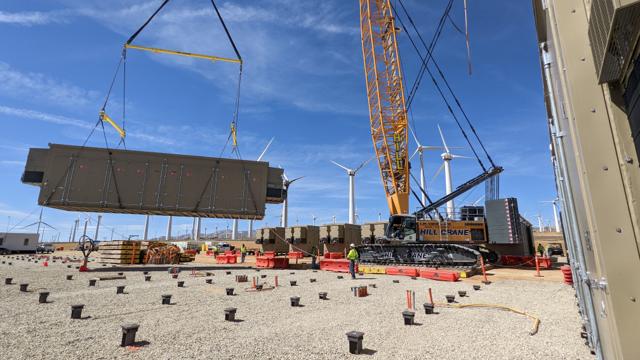


Arizona has become one of the fastest-growing data center markets in the country, with new facilities breaking ground across the Phoenix metro and surrounding areas at a pace that's straining every part of the construction supply chain, crane services included. Data center construction isn't just another large commercial build. It comes with a specific set of lifting challenges, oversized mechanical equipment, extremely tight schedules, and strict site security requirements, that demand crane planning built specifically around this kind of project rather than adapted from a more generic commercial construction approach.
This article covers what makes data center construction such a distinct crane services challenge, and what project teams should expect when planning lift operations for this kind of build.
Why Data Center Construction Is a Distinct Lifting Challenge
Data centers are, at their core, industrial facilities wrapped in commercial-looking exteriors. Behind that exterior sits an enormous amount of heavy mechanical and electrical equipment, backup generators, large-scale cooling units, transformers, switchgear, all of which needs to be lifted, positioned, and installed with precision, often at specific points during construction when access and sequencing windows are tight. This is a fundamentally different lifting profile than a typical office building or retail construction project, closer in character to industrial or power generation work than standard commercial construction.
The scale of individual pieces of equipment involved also sets data center work apart. Backup generators and large chillers frequently qualify as oversized, heavy loads requiring careful capacity planning, not the routine steel and material lifts that make up the bulk of a typical commercial build's crane needs.
Matching Crane Capacity to Data Center Equipment
Getting crane capacity right for this kind of equipment starts with understanding exactly what's being lifted, its weight, dimensions, and the specific point in the project where it needs to be placed. Our crane lifting capacity guide covers the fundamentals of how capacity is calculated relative to reach and configuration, and data center projects push these calculations harder than most commercial builds given how often oversized generators, cooling equipment, and electrical infrastructure are involved in a single project's equipment list.
Undersizing crane capacity on this kind of equipment isn't a minor miscalculation; it can mean a critical piece of infrastructure simply can't be safely lifted and placed as planned, creating exactly the kind of schedule disruption that data center construction, often running on investor-driven, revenue-sensitive timelines, can least afford.
Site Conditions and Ground Assessment
Data center sites vary considerably, some built on previously undeveloped land, others on repurposed industrial or commercial sites, each bringing its own soil conditions and site logistics challenges. Our article on ground conditions and crane setup site assessment covers why soil evaluation matters for safe crane placement, and this assessment carries added weight on data center projects given how much oversized equipment needs to move across and be lifted at a site over the course of construction, not just during a single mobilization.
Site logistics planning also has to account for the sheer footprint many data center campuses require, often multiple buildings and substantial supporting infrastructure across a single development, which means crane planning frequently spans a much larger and more complex site layout than a typical single-building commercial project.
Choosing the Right Crane Type for Different Phases
Data center construction typically moves through distinct phases, from initial site work and structural steel through mechanical and electrical equipment installation, and the right crane type can shift across those phases. Our comparison of crawler cranes vs. truck cranes covers how these two mobile crane types differ in capability and mobility, and data center projects often benefit from planning crane type selection around each specific phase's needs rather than assuming a single crane configuration will serve the entire project equally well from groundbreaking through equipment commissioning.
Permitting for Large-Scale Industrial Projects
Data center construction projects, given their scale and the oversized equipment frequently involved, often require specific lift permits and coordination with local authorities beyond what a standard commercial project needs. Our guide on crane lift permits and requirements in California and Arizona covers this regulatory landscape, and it's worth building permit lead time into project planning early for data center work specifically, since the oversized loads common on these projects sometimes trigger additional permitting requirements that a smaller commercial lift wouldn't.
Drawing on Experience From Other Industrial Verticals
Data center construction shares real similarities with other large-scale industrial projects that demand heavy, precisely coordinated lifting under tight operational constraints. Our experience with crane services for wind energy and renewable projects and refinery turnaround work across California and Arizona reflects the same kind of heavy, schedule-sensitive, precision lifting that data center construction demands, even though the end product looks nothing alike. That cross-industry experience with oversized equipment, tight coordination windows, and complex site logistics translates directly into how a data center project gets planned and executed.
Why Schedule Pressure Runs Higher on Data Center Projects
Data center construction frequently operates under investor and pre-lease commitments that make schedule delays extraordinarily costly, sometimes even more so than the direct cost of the delay itself, given contractual penalties and lost revenue tied to a facility going live later than planned. This schedule pressure means crane logistics can't be treated as a flexible, adjust-as-you-go part of the project; it needs to be planned with the same rigor as the electrical and mechanical systems the crane work is supporting.
Our guide on strategic lift planning for complex crane and industrial projects covers how lift planning scales in complexity as project stakes rise, and data center construction sits firmly in that high-stakes category, where a lift plan has to account not just for safe execution but for keeping an entire, tightly sequenced construction schedule on track.
Security and Site Access Considerations
Data centers carry security requirements that go well beyond a typical construction site, given the sensitive infrastructure and, in many cases, sensitive tenant data these facilities are ultimately built to house. Crane crews and equipment moving on and off these sites need to work within access protocols and security clearances that add a layer of coordination most commercial construction projects simply don't require. Planning for these requirements upfront, rather than discovering mid-project that standard equipment delivery and crew access procedures don't fit a site's security posture, avoids unnecessary delays on projects where delays are already the most expensive possible outcome.
This can mean advance background checks for crew members, restricted delivery windows coordinated with site security staff, or designated staging areas separate from the active construction perimeter. None of this is inherently complicated, but it does require building extra coordination time into a lift schedule that's already tight, and a crane provider unfamiliar with these requirements can easily underestimate how much lead time a properly coordinated mobilization actually needs on a security-conscious site.
What to Ask a Crane Provider Before a Data Center Project
Given how much rides on getting lift planning right for this kind of build, a few direct questions help separate a provider genuinely prepared for data center work from one simply applying standard commercial practices to an unfamiliar project type. Has the provider handled comparable oversized equipment lifts before, generators, transformers, or large chillers in the same general weight and dimension range your project involves? What's their track record coordinating with site security requirements on sensitive or restricted-access projects? And how do they structure permit lead time and contingency planning for a project where a delayed lift doesn't just push back one trade, it can cascade through an entire investor-driven timeline?
A provider who can answer these questions specifically, rather than in general terms borrowed from typical commercial project experience, is far more likely to plan and execute lift operations that actually hold up against the pace and precision data center construction demands.
Coordinating Complex, Multi-Phase Logistics
Because data center construction often spans months of ongoing crane activity across different phases and equipment types, logistics planning benefits from the same coordinated approach used on other large, multi-phase industrial projects. Keeping equipment mobilization, permit timing, and crew scheduling aligned with the broader construction sequence is what prevents crane availability from becoming the bottleneck on a project where every other trade is also working against a tight, unforgiving timeline.
Final Thoughts
Arizona's data center construction boom is bringing a volume and pace of large-scale industrial lifting work that looks more like power generation or refinery construction than typical commercial building, oversized mechanical equipment, tight security-conscious site access, and schedules with little room for error. Planning crane services around these specific demands, rather than treating a data center build like any other commercial project, is what keeps this kind of high-stakes, tightly sequenced construction on track from groundbreaking through the equipment installations that actually bring a facility online.