

Most crane lifts in California and Arizona require some form of permit or approval especially when the crane sets up on a public street, swings over public right-of-way, operates near airports, or the load qualifies as a critical lift. Common requirements include municipal street-use or encroachment permits, traffic control plans, oversize transport permits for getting the crane to your site, FAA notification near airports, and engineered lift plans for critical picks. Requirements vary by city and by lift, and permit lead times range from a few days to several weeks which is why permitting belongs at the start of your project schedule, not the end.
Here's the complete breakdown of what your lift may require, who's responsible for what, and how an experienced crane partner keeps paperwork from becoming your project's bottleneck.
When Does a Crane Lift Require a Permit?
Not every lift needs a permit a crane working entirely within private property, lifting over private property, often doesn't. But the moment your lift touches the public realm, requirements begin stacking up. The most common triggers:
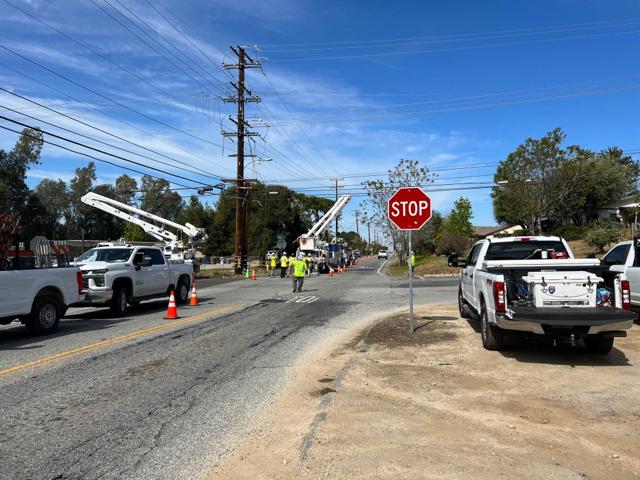
The crane sets up on a public street, sidewalk, or alley. This is the classic case in dense areas like Los Angeles, Long Beach, San Diego, and Phoenix the crane simply can't fit on the site, so it occupies a lane. That requires a street-use or encroachment permit from the city, almost always paired with a traffic control plan.
The load or boom swings over the public right-of-way. Even a crane parked on private property may need approval if the boom or suspended load passes over a street, sidewalk, or neighboring property during the pick.
The crane must travel to your site as an oversize load. Large mobile cranes and their counterweight loads frequently exceed legal road dimensions, requiring transport permits from Caltrans in California or ADOT in Arizona, sometimes with pilot cars and route restrictions. Getting heavy equipment to the site is a discipline of its own — one we covered in depth in our post on modular transport for heavy loads.
The lift happens near an airport. Crane booms are tall structures in the eyes of the FAA. Lifts within certain distances of airports and Southern California and the Phoenix metro are dense with them can require FAA notification and approval, a process with a meaningful lead time.
Night work, noise, or extended closures. Lifts scheduled outside normal hours to minimize traffic impact often trade one permit for another: after-hours work variances and noise permits.
What Is a Traffic Control Plan and Who Provides It?
When a crane occupies or affects a public street, the city will require a traffic control plan (TCP): a drawing showing lane closures, signage, barricades, flagger positions, and pedestrian detours, prepared to the standards the jurisdiction enforces. In busy corridors, cities may also dictate when you can close lanes — pushing lifts to nights or weekends.
This is a place where an experienced, full-service lift partner earns their keep. Coordinating the TCP, the permit, the barricade company, and the crane schedule into one synchronized lift day is exactly the complexity-reduction we described in how multi-service lift partners reduce project complexity and precisely the kind of handoff that goes wrong when three separate vendors each assume someone else is handling it.
What Is a Critical Lift Plan, and When Is One Required?
Beyond municipal permits, certain lifts trigger engineering requirements. A lift is commonly classified as critical when it approaches a high percentage of the crane's rated capacity, involves two cranes sharing one load, picks over occupied structures or active facilities, or handles loads that are unusually valuable, hazardous, or irreplaceable.
Critical lifts require a documented, engineered lift plan: crane configuration and position, load weight verification, rigging design, ground bearing analysis, swing paths, and contingency procedures — reviewed and signed before anyone touches a lever. If you've read our piece on why detailed lift planning is essential for heavy lifting projects, you know our position: the paperwork isn't bureaucracy, it's the lift performed on paper first, where mistakes are free. Understanding how capacity percentages drive the critical-lift threshold starts with the fundamentals in our crane lifting capacity guide.
Ground conditions deserve their own mention. Many jurisdictions and most professional lift plans require verification that the ground can support the crane's outrigger loads — which can concentrate enormous force onto small areas. Crane mats, engineered pads, and sometimes geotechnical review are part of the approval picture, especially over underground utilities, vaults, and parking structures.
What Do OSHA and Cal/OSHA Require for Crane Operations?
Permits get you legal access to the space; regulatory compliance governs the lift itself. Federal OSHA requires certified crane operators, qualified riggers and signal persons, documented crane inspections, and adherence to load chart limits. California adds its own layer Cal/OSHA maintains crane requirements that are in several respects stricter than federal rules, including its own certification and inspection regime — one of the reasons out-of-state contractors are often surprised by California lift requirements.
For project managers, the practical takeaway is simple: verify that your crane provider's operators, riggers, and equipment certifications are current and jurisdiction-appropriate before lift day. It's a standard item on the vetting checklist we laid out in choosing the right crane service in 2026, and a place where established providers separate themselves instantly from the low bid.
How Long Do Crane Permits Take in California and Arizona?
Lead time is where permitting sinks schedules. As a planning rule: simple street-use permits in cooperative jurisdictions can move in days; major-city encroachment permits with traffic control review commonly take one to several weeks; FAA determinations near airports can take longer still; and oversize transport permits add their own clock, especially for superloads requiring route surveys.
The compounding problem is sequencing the transport permit depends on the crane selection, the TCP depends on the crane's footprint, and the street permit depends on the TCP. Start the chain late and every link slips together. This is why permitting appears early in the methodology we described in strategic crane planning for heavy lifting projects: the crane, the route, and the paperwork get planned as one package, not three afterthoughts. Handled well, the entire process becomes invisible to the project, the coordination advantage we detailed in how crane services improve project coordination and efficiency.
Who Is Responsible for Crane Permits the Contractor or the Crane Company?
It depends on the arrangement, and assuming is how gaps happen. Under a bare rental, permitting typically falls to the contractor. Under a full-service or operated-and-maintained arrangement, an experienced crane provider usually manages crane-related permits street use, transport, TCP coordination as part of the service. The critical step is putting responsibility in writing during the quote stage: who pulls each permit, who prepares the TCP, who notifies the FAA if required, and who owns the timeline.
At Hill Crane, permit management is built into how we deliver crane rental and rigging across California and Arizona because a lift that's mechanically perfect but administratively stalled is still a stalled lift, and the delay math we walked through in how one-stop heavy lift services reduce project delays and cost overruns applies to paperwork exactly as it does to iron.
Frequently Asked Questions About Crane Permits and Requirements
Do I need a permit to lift over my own property? Often no a crane set up on private property, lifting entirely over private property, may proceed without municipal permits. But verify locally: some cities require notification for any crane erection, and airport proximity rules apply regardless of property lines.
Can a crane close a street for just a few hours? Yes — short-duration closures are routine for HVAC sets, sign installations, and rooftop equipment picks. They still require the street-use permit and traffic control plan; the duration affects the conditions, not the requirement.
What happens if you lift without a required permit? Stop-work orders, fines, and liability exposure plus the scheduled damage of a crane demobilizing and remobilizing. The permit is always cheaper than the shutdown.
Does a small crane avoid permit requirements? Size affects transport permits, but street-use, right-of-way, and airspace rules are triggered by where the crane works and swings, not how big it is. A compact hydraulic truck crane in a travel lane needs the lane permit all the same though its smaller footprint often simplifies the TCP, one of the practical advantages we covered in maximizing project efficiency with hydraulic truck cranes.
How early should I involve the crane company for a permitted lift? As early as the lift is identifiable ideally weeks before the target date for urban work, and earlier for airport-adjacent or critical lifts. Early involvement lets crane selection, transport routing, and permitting proceed in parallel instead of in sequence.
Get the Permits Handled and the Lift Done Right
Permits, traffic plans, transport approvals, and engineered lift documentation aren't obstacles to a successful lift, they're part of one, and they reward the same thing every other part of heavy lifting rewards: experience and early planning.
Hill Crane has managed permitted lifts across California and Arizona for decades from single-lane closures in Long Beach to multi-agency critical lifts handling the paperwork, the traffic control coordination, and the lift itself as one accountable package. Planning a lift that touches a street, an airport zone, or a critical load? Explore our crane and rigging services or contact our team early and let us put the approvals on the schedule before they ever threaten it.