

Some loads are too large, too heavy, or too geometrically complex to be moved by a conventional crane or a standard heavy haul truck. A reactor vessel that weighs 600 tons. A bridge girder that spans 200 feet. A prefabricated industrial module assembled off-site that needs to travel three miles to its final installation position in a refinery. A historic building being relocated across a city block. These are the projects where self-propelled modular transporters become the tool of choice, and where the engineering behind the move is as complex as the fabrication of the object being moved.
Hill Crane has been providing crane and rigging services across California and Arizona since 1947. The SPMT and modular transport service is an extension of that history into the specialized heavy transport category that serves the petrochemical, power generation, infrastructure, and industrial construction markets that operate across both states. Understanding what SPMT transport is, what it can accomplish, and when it is the right tool for a project helps engineers, project managers, and contractors make better decisions about how to approach their most challenging load movements.
What a Self-Propelled Modular Transporter Actually Is
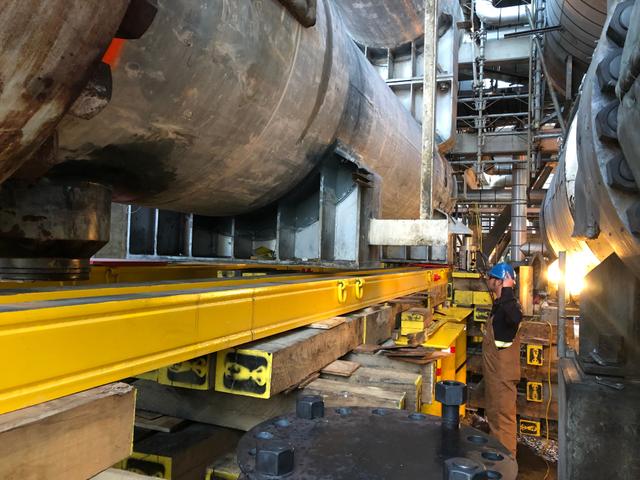
A self-propelled modular transporter is a platform vehicle with a large number of individually steerable axle lines, each carrying its own hydraulic suspension, that can be combined into configurations that match the shape and weight of virtually any load. Unlike a conventional truck and trailer combination, where the trailer dimensions are fixed and the truck provides traction from a single power point, an SPMT is a system of modular platform units that link together electronically and mechanically to create a custom transport platform for each specific move.
The hydraulic suspension on each axle line serves multiple functions simultaneously. It supports the load. It allows the platform height to be raised and lowered hydraulically, which enables pick-and-set operations that would otherwise require a crane. And it compensates for uneven terrain, keeping the load level even as individual axle lines traverse grade changes and surface variations that would create dangerous tilting on a rigid platform.
Steering on an SPMT system is fully electronic. Each axle line can be individually programmed to steer at any angle within its range, which allows the entire platform system to execute movements that no conventional wheeled vehicle can replicate. A fully loaded SPMT configuration can move forward, backward, sideways, and in any diagonal, and it can pivot about any point on the platform rather than only about the conventional front-axle steering pivot. This steering flexibility is what makes SPMT transport possible in the confined spaces of an industrial plant, along a congested highway corridor, or through the street network of a dense California city.
The load is secured to the platform through a combination of mechanical engagement, hydraulic lifting, and in some cases custom-fabricated saddles that distribute the load's weight across the platform in a way that keeps axle loads within the SPMT's rated capacity and within the road surface's bearing capacity.
When SPMT Transport Is the Right Solution
SPMT transport is not the right tool for every heavy load movement. It is the right tool for specific situations where the characteristics of the load, the route, or the installation requirement make conventional transport or crane lifting the inferior choice.
Loads That Exceed Crane Capacity
Some loads are simply too heavy for any crane available in the market or in the operational area. A large petrochemical reactor vessel, a nuclear steam generator, or a major bridge component may weigh several hundred tons or more. The largest mobile cranes in the California and Arizona market have impressive capacity, but there are loads that exceed even the largest machine's rated capacity at the working radius required.
SPMT transport moves these loads horizontally without lifting them. The load is jacked or craned onto the SPMT platform and then transported to the installation position, where it is either set by the SPMT's hydraulic system or transferred to a crane for final vertical positioning. The combination of SPMT for horizontal transport and crane for vertical positioning is a standard approach for large industrial modules and vessels.
Loads Too Large for Road Transport
Conventional oversized load permits in California have defined limits on width, height, and length that standard heavy haul trailers can accommodate with appropriate permits. Loads that exceed these limits cannot be moved on public roads by conventional trailer equipment without either disassembly, which is often not possible for fabricated assemblies, or the use of SPMT configurations with special permits that allow movement on public roads under specific conditions.
California Caltrans and Arizona ADOT have specific permit processes for SPMT moves that include route surveys, utility company coordination for overhead clearances, and in some cases temporary traffic control that involves both states' transportation agencies. Navigating these permit processes requires experience with the specific agencies and familiarity with the requirements that experienced SPMT operators maintain as part of their operational capability.
Loads Requiring Precise Positioning
Some industrial installations require the load to be positioned with precision that crane operations at long radius cannot reliably achieve. Setting a large vessel onto nozzle connections that have a defined alignment tolerance, placing a module onto prepared foundation pads that require simultaneous contact within a defined flatness tolerance, or maneuvering a large fabricated assembly through a narrow structural opening are all situations where the SPMT's combination of hydraulic height adjustment and precise steering control produces positioning accuracy that crane operations cannot match.
The precision positioning capability of SPMT transport is particularly valuable in refinery turnaround work, where large equipment must be replaced within the structural envelope of an existing facility that does not allow the repositioning margin that an open site provides. The critical lift risk management and planning that complex projects in California and Arizona require is covered in the article on critical lift risk management strategies for complex crane projects. SPMT moves share the same systematic risk assessment approach as complex crane lifts, with the additional dimension of route survey, road surface assessment, and transportation permitting.
How SPMT Moves Are Engineered
An SPMT move does not begin with equipment mobilization. It begins with engineering analysis that confirms the move is feasible, defines the equipment configuration required, and establishes the route and procedure that will be followed.
Load Analysis
The load's weight, center of gravity, and structural characteristics determine the SPMT configuration required. Weight distribution across the platform must stay within the rated axle loads of the specific SPMT units being used. Center of gravity location relative to the platform geometry determines whether the load will remain stable during transport. And the structural capacity of the load itself at the points where it contacts the platform determines whether custom saddles or load spreading fixtures are required to prevent structural damage during the move.
Route Survey
The route from origin to destination is surveyed to identify every constraint that affects the move. Road surface bearing capacity determines whether the load of the fully configured SPMT can be distributed across the available road surface without exceeding pavement design capacity. This is a critical analysis in California, where urban streets that have not been evaluated for SPMT loading may have buried utilities, vaults, and infrastructure beneath the surface that limits what loading they can safely carry.
Overhead clearances along the entire route must accommodate the height of the load on the SPMT platform. Utility lines, traffic signals, bridges, and building overhangs all establish clearance requirements that determine the route's feasibility and in some cases require temporary modification of overhead infrastructure to allow the move to proceed.
Turning radius requirements for the SPMT configuration at its planned size must be achievable at every turn along the route. This analysis is particularly important in urban California environments where block lengths and intersection geometries limit how large a platform can negotiate each turn without encroaching onto adjacent lanes or structures.
Permit Coordination
The permit process for an SPMT move in California involves Caltrans for state highway routes, local transportation agencies for city and county streets, and utility companies for coordination of any overhead line management required along the route. In Arizona, ADOT coordinates state highway permits and local agencies handle city and county route permitting. The permitting timeline for a complex SPMT move can extend to weeks or months for particularly demanding routes that require utility coordination and structural analysis of road surfaces.
Hill Crane's permit coordination capability, developed over decades of operating in California and Arizona, includes established relationships with the agencies and utility companies that govern SPMT move approvals. This established relationship reduces the permitting timeline relative to a first-time applicant navigating the same process.
The planning approach that Hill Crane brings to complex lift and transport projects, including the pre-project assessment that identifies constraints before they become field problems, is described in the article on why detailed lift planning is essential for successful heavy lifting projects. SPMT move planning follows the same systematic approach, extended to include the transportation engineering dimension that crane-only projects do not require.
SPMT Transport in California's Industrial Markets
California's industrial geography concentrates SPMT transport demand in specific market sectors and geographic corridors.
Refinery and Petrochemical
The Carson, Torrance, El Segundo, and Richmond area refineries and the broader Southern California industrial corridor generate SPMT transport demand for reactor vessel replacements, heat exchanger movements, and the module installation associated with major refinery turnaround and upgrade projects. These moves happen inside facility boundaries where road surfaces are engineered for industrial loading and where the confined spaces of a process plant make SPMT steering precision critical.
Power Generation
Transformer replacements at California's utility substations represent a consistent SPMT transport market. Large power transformers can weigh hundreds of tons and must be positioned precisely on existing foundations with connection tolerances that require SPMT precision. The electrical infrastructure focus of Hill Crane's specialized support services, which includes transformer installation alongside BESS and other electrical infrastructure work, positions the company for these moves.
Infrastructure and Bridge Work
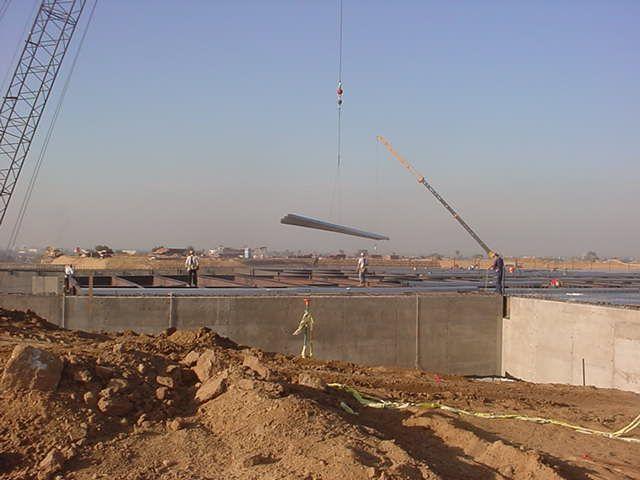
California's ongoing bridge rehabilitation and replacement program generates modular transport demand for prefabricated bridge components that arrive at a project site requiring placement with limited lifting equipment access. SPMT transport of bridge girders, deck panels, and prefabricated structural elements is a growing segment of the modular transport market as prefabricated bridge construction methods advance.
Arizona Industrial Development
Arizona's industrial development in the Phoenix metropolitan area and the broader Maricopa County industrial corridor is generating increasing demand for SPMT services as new manufacturing facilities, data centers, and energy infrastructure projects require large equipment installation that conventional transport cannot accomplish.
Combining SPMT Transport With Crane Operations
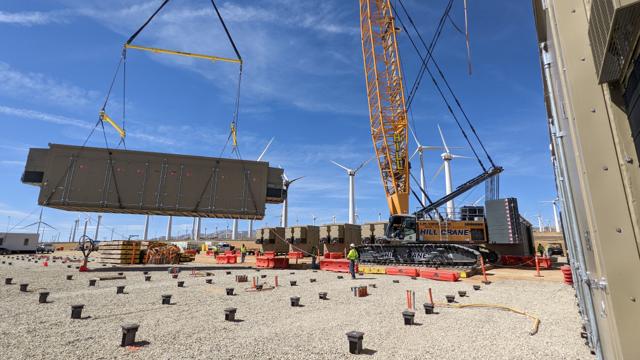
Many of the most demanding industrial load movements combine SPMT transport for the horizontal movement phase with crane operations for the vertical positioning phase. The SPMT carries the load from fabrication or laydown area to the installation site. The crane then lifts the load from the SPMT platform to its final vertical position on the structure or foundation.
This combination requires coordination between the SPMT operation and the crane operation at the transfer point. The SPMT must position the load precisely below the crane's hook at the transfer radius for the planned lift. The crane's lift plan must account for the load's weight, center of gravity, and rigging points in exactly the same way as any other crane pick.
The rigging principles that govern the crane portion of a combined SPMT and crane operation are the same as for any heavy lift. The article on crane rigging and heavy lifts and the best practices that protect every project covers the rigging discipline that applies at the interface between SPMT transport and crane lifting.
The single-source advantage of working with Hill Crane for both the SPMT transport and the crane operations on these combined moves is the coordination that a unified team provides. Communication between the SPMT operator and the crane operator, the shared lift plan that covers both the transport phase and the crane phase, and the single point of accountability for the complete project reduce the coordination risk that separate contractors create. The value of multi-service heavy lift providers in reducing project complexity is covered in the article on how multi-service lift partners reduce project complexity and delays.
Getting Started With SPMT and Modular Transport Planning
Hill Crane is available 24/7 for crane and rigging inquiries, including SPMT and modular transport project discussions. The initial conversation about an SPMT project covers the load characteristics, the origin and destination locations, the desired move timeline, and any known constraints along the route or at the installation site.
With this information, Hill Crane can provide a preliminary feasibility assessment, identify the major permit requirements and their expected timelines, and propose the equipment configuration and project approach before detailed engineering begins.