Every building project, industrial facility upgrade, and infrastructure installation has a moment where something heavy needs to go somewhere it cannot walk, roll, or be carried by hand. A rooftop HVAC unit that weighs six tons. A transformer that needs to drop into a substation vault. A steel beam going to the fourteenth floor. A diesel generator being set on a raised platform inside a building that has no floor openings large enough to lower it through.
This is hoisting and equipment lifting work. It is not crane rental in the standard sense, where a contractor rents a machine and an operator and handles the lift themselves. It is a service where the lifting company brings the equipment, the operator, the rigging expertise, the lift plan, and the accountability for the outcome. Hill Crane has been delivering that service across California and Arizona since 1947, and the specific demands of hoisting work in the Southwest's construction and industrial markets are exactly what the company has built its reputation on.
What Hoisting Services Actually Cover
Hoisting and equipment lifting is a broader service category than most project owners initially realize. It covers any situation where a load needs to be moved vertically or placed in a position that cannot be reached by standard material handling equipment like forklifts or boom trucks.
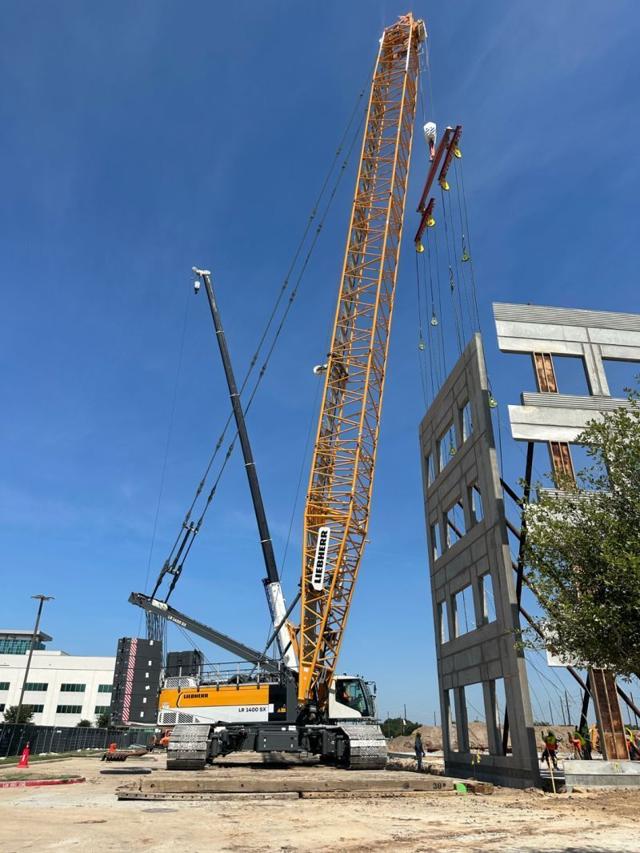
The most common hoisting work that Hill Crane handles across California and Arizona includes rooftop mechanical and electrical equipment placement, industrial machinery installation and removal, transformer and switchgear setting, generator placement for commercial and industrial power backup systems, HVAC unit placement on mid-rise and high-rise buildings, and structural steel placement in situations where access or weight exceeds what tower crane-equipped projects typically handle.
Each of these applications has different weight profiles, different access constraints, different precision requirements, and different rigging challenges. A rooftop HVAC unit being set on a commercial building in Los Angeles requires navigating street access, overhead utility clearances, surrounding occupied buildings, and the structural capacity of the roof itself as a landing surface. A large industrial machine being removed from a facility for overhaul requires disassembly sequencing, careful rigging to avoid damaging precision-machined surfaces, and coordination with the facility's operational schedule to minimize disruption to adjacent production areas.
The common thread across all of these lifts is that professional equipment, professional rigging, and professional planning are not optional. Hoisting work done without adequate preparation produces property damage, schedule delays, and safety incidents that could have been entirely prevented. The rigging principles and preparation discipline that prevent these outcomes are explored in detail in the guide to crane rigging and heavy lifts in California and Arizona.
Rooftop Equipment Setting: Where Hoisting Work Is Most Visible
California and Arizona's commercial construction market generates enormous demand for rooftop equipment setting. Office buildings, hospitals, data centers, hotels, retail centers, and industrial facilities all rely on rooftop mechanical equipment that must be placed during construction and periodically replaced over the building's service life.
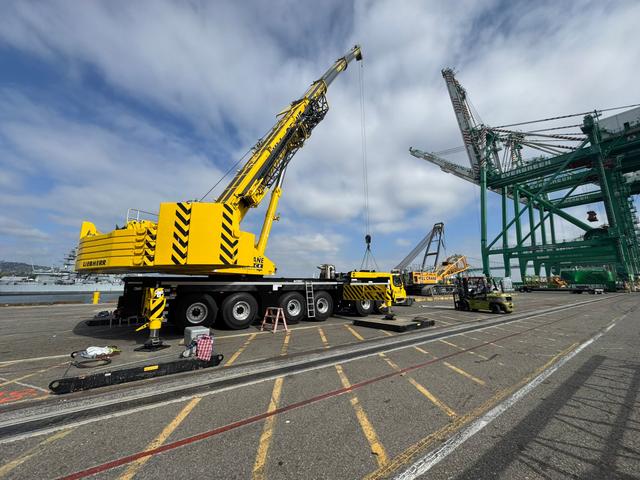
Rooftop HVAC units are the most common hoisting project Hill Crane handles. These units range from relatively modest packaged rooftop units to large custom air handling systems weighing 20 tons or more. Getting a unit from the delivery truck to the roof requires a crane positioned on the street or an adjacent property, a lift plan that accounts for the building height and setback, and rigging that keeps the unit level and undamaged during the lift.
Urban California sites create access challenges that require specific planning before the crane arrives. Street closures or lane restrictions for crane setup, permits from city transportation departments for crane operations over public right-of-way, and coordination with building tenants and neighbors about the timing of a lift that may temporarily affect visibility or access all require advance work that the Hill Crane team handles as part of the service.
For rooftop work on facilities in operation, the window for completing the lift may be tightly constrained by building operations. A hospital cannot have its HVAC system down for longer than a defined maintenance window. A data center cooling replacement happens during a planned maintenance event that has been scheduled months in advance. The crane and rigging service must perform within that window without delay.
Selecting the right crane configuration for rooftop hoisting work in California and Arizona is as important as the rigging and planning around it. The full breakdown of how to match crane type and capacity to rooftop equipment lifting requirements is covered in the guide to choosing the right crane for your heavy lifting project. The coordination that effective crane services provide to project schedules, and why it changes outcomes on occupied building jobs, is covered in the article on how crane services improve project coordination and efficiency.
Industrial Machinery Lifting Precision Over Power
Industrial facilities across Southern California and Arizona operate equipment that eventually needs to be moved for maintenance, replacement, or facility reconfiguration. CNC machining centers, hydraulic presses, industrial ovens, compressors, pumps, and specialty process equipment all require lifting services at some point in their operational life.
Industrial machinery lifting is different from structural steel or equipment placement in one important respect: the equipment being lifted is usually a finished, functional machine with precision-machined surfaces, sensitive controls, and alignment requirements that cannot tolerate the handling liberties that structural work allows. A crane hook contact with an unprotected machine surface leaves marks that affect the machine's value and sometimes its function. A sling that contacts a hydraulic fitting under load can damage it in ways that are not apparent until the machine is put back into operation.
Rigging for industrial machinery requires knowledge of the specific machine's lift point locations, which may be marked on the machine itself, specified in the installation manual, or determined by the crane crew through center of gravity calculation when documentation is not available. Using improvised lift points on precision equipment is a risk that experienced hoisting crews do not take.
The workflow for industrial machinery removal typically involves the crane crew coordinating with the facility's maintenance or operations team to confirm machine status before rigging begins. Fluid drainage, disconnection of electrical and pneumatic connections, and removal of any accessories or guards that would interfere with rigging must happen before the lift begins. The crane crew's role starts when the machine is ready to lift, and the preparation work that precedes that is part of the project coordination that keeps the lift on schedule.
Multi-service lift partners who handle rigging, crane operation, and the coordination work that surrounds a machinery placement reduce the number of contractors a project manager has to manage simultaneously. The case for consolidating these services under one provider is made in the article on how multi-service lift partners reduce project complexity.
Transformer and Electrical Equipment Setting
Power transformers, switchgear assemblies, and large electrical equipment represent some of the most weight-sensitive and value-intensive hoisting work Hill Crane performs across its California and Arizona service territory.
Utility and industrial transformers range from relatively small distribution units to large power transformers weighing hundreds of tons. The setting procedure for a large transformer involves precise positioning over anchor points, careful control of descent rate to avoid impact loading on the foundation, and leveling adjustment that may require multiple incremental moves before the unit is in its final position.
Oil-filled transformers require additional handling care because the transformer oil serves as both insulation and cooling medium. Tilting an oil-filled transformer beyond the manufacturer's specified angle risks oil migration to areas that should not be oil-filled and can damage the internal insulation structure. The crane crew setting an oil-filled transformer needs to know the tilt angle limits and maintain control throughout the lift to stay within them.
Switchgear and other electrical equipment settings are often performed in substations and electrical rooms with limited access and tight clearances around energized equipment. Working near energized electrical infrastructure requires coordination with the utility or facility electrical team, adherence to defined approach distances and exclusion zones, and the kind of deliberate, controlled lift execution that comes from experience with these environments.
Hydraulic truck cranes are frequently the right configuration for transformer and switchgear settings because their compact setup footprint works within the constrained access that electrical facilities often have. The efficiency advantages of hydraulic truck cranes on precision equipment setting are covered in the article on maximizing project efficiency with hydraulic truck cranes.
Hoisting in Constrained Urban Environments
Los Angeles, Long Beach, Anaheim, San Diego, and Phoenix all present urban hoisting environments where the straightforward lift plan that works on an open industrial site cannot simply be applied without modification.
Street hoisting, where the crane must be set up on or adjacent to a public street, requires permits from the city's public works or transportation department and typically involves coordination with local police for traffic control. The permit process has defined lead times that need to be accounted for in project scheduling. A hoisting job in downtown Los Angeles that requires a lane closure permit cannot be scheduled on two days' notice.
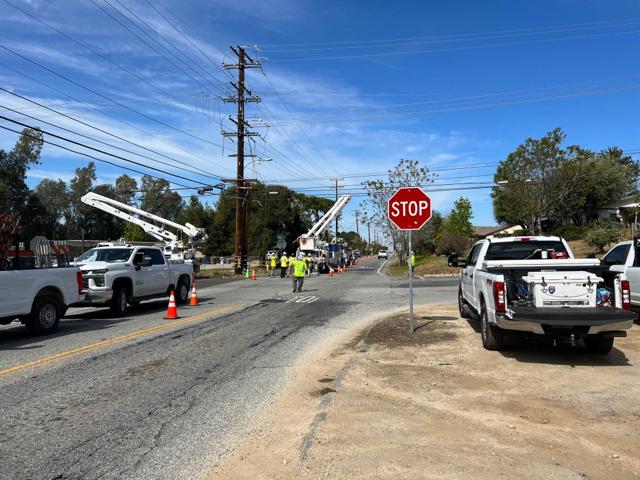
Overhead utility clearances are a constant consideration on urban California and Arizona hoisting jobs. The lift path of the load must clear utility lines that may be at elevations well below the boom tip. Working with the utility company to de-energize or guard lines when the planned lift path would violate safety clearances is part of the pre-job coordination that prevents the most serious incidents.
Adjacent occupied buildings restrict crane swing arcs in ways that an open industrial site does not. A crane positioned on a downtown street may only be able to swing through a limited arc before the boom or load would be over an occupied building. The lift plan accounts for these swing restrictions and positions the crane and the load accordingly.
Telescopic cranes provide the reach and height capability that urban hoisting work in California and Arizona often requires when building setbacks and overhead clearances demand more flexibility than a standard configuration delivers. The specific capability of telescopic cranes for constrained urban lift applications is covered in the article on telescopic cranes and their applications in complex lifting environments.
Choosing the right crane service provider in California and Arizona for urban hoisting work requires evaluating permit experience, urban environment knowledge, and coordination with local agencies as carefully as evaluating the equipment inventory. The criteria that separate the right crane service from a less suitable alternative are covered in the guide to choosing the right crane service in 2026.
Lift Planning for Hoisting Projects
Every hoisting job Hill Crane performs is preceded by a lift plan. The lift plan is the document that specifies the crane configuration, the rigging arrangement, the lift sequence, the weight and center of gravity of the load, the crane position and its ground bearing requirements, and any special handling requirements specific to the equipment being lifted.
For straightforward single-pick hoisting jobs, the lift plan is a focused document that confirms the lift is within crane capacity at the required radius and that the rigging is appropriate for the load. For complex hoisting projects involving multiple pieces, tight access, or equipment with specific handling requirements, the lift plan is an engineering document that requires real calculation and review before any equipment is mobilized.
The consequences of skipping or rushing the lift plan are visible in hoisting incidents. A crane that is inadequately sized for the radius at which it needs to work cannot complete the lift safely. Rigging that is not matched to the load's actual center of gravity produces a load that hangs at an angle and cannot be landed precisely. An outrigger set on inadequate ground bearing capacity risks crane movement during the lift.
Strategic lift planning that accounts for every variable before the first machine arrives on site is what separates successful hoisting projects from ones that encounter problems. The article on strategic crane planning for heavy lifting projects covers the planning methodology that governs every complex lift Hill Crane executes. The principle that lift planning is the foundation of safe and successful heavy lifting is further developed in the article on why detailed lift planning is essential for heavy lifting projects.
Understanding how to assess crane lifting capacity for specific equipment being hoisted is part of the planning process that every hoisting project requires. The complete guide to crane lifting capacity provides the framework for understanding how capacity ratings translate to real-world performance at specific radii and configurations.
Single-Source Hoisting Services: Why It Matters
Many hoisting projects involve not just the lift itself but a surrounding set of services including rigging, traffic control, lift planning, and in some cases heavy haul transportation of the equipment being placed. When these services are provided by separate contractors, coordination gaps between them create the scheduling problems and communication failures that cause delays and cost overruns.
Hill Crane provides crane rental, rigging, lift planning, traffic control, and heavy haul as an integrated service offering. A project manager working with Hill Crane on a rooftop equipment setting project has one point of contact for the crane, the rigging, the traffic control permit coordination, and the delivery of the equipment to the site. The communication that would otherwise travel between three or four separate contractors travels within one team.
The operational and financial advantages of working with a single-source heavy lift provider are covered in the article on how one-stop heavy lift services reduce project delays and cost overruns. For hoisting projects in California and Arizona where time on site is constrained and coordination is complex, this integration is not just convenient. It is operationally significant.
The broader value that professional crane services deliver to construction and industrial projects, and why the service relationship matters as much as the equipment itself, is explored in the article on professional crane services for construction projects.Efficient Lift Execution on Hoisting Projects
Planning produces the right setup. Execution determines the actual outcome. Hill Crane's lift execution approach on hoisting projects reflects the discipline that separates a team that has performed these lifts many times from one that is figuring it out as it goes.
The efficient execution of crane lifts, including how operator skill, rigging preparation, and site coordination combine to produce consistent results, is covered in the article on efficient crane lift execution and project performance. On hoisting jobs where the lift window is defined by a facility maintenance schedule or a utility switching event, efficient execution is not a preference. It is the requirement.
Strategic lift planning and safe execution work together in every hoisting project Hill Crane performs. The combination of planning discipline and execution capability is explored in the article on strategic lift planning for crane efficiency and safety.
Requesting Hoisting Services From Hill Crane
The information that makes a hoisting service proposal accurate and useful includes the weight of the equipment being lifted, the pick point and set point locations and heights, the site address and access conditions, any constraints on crane positioning at the site, and the project timeline including any operational windows that define when the lift must be completed.
With this information, Hill Crane can confirm equipment availability, develop a preliminary lift plan, identify any permit requirements, and provide a service proposal that reflects the actual requirements of the job rather than a generic estimate.
Hill Crane serves hoisting and equipment lifting projects across Los Angeles, Long Beach, Anaheim, Riverside, and San Diego in California and Phoenix, Glendale, Tempe, and Maricopa County in Arizona. The company is available 24/7 for emergency hoisting situations where equipment failure or project urgency requires an immediate response.